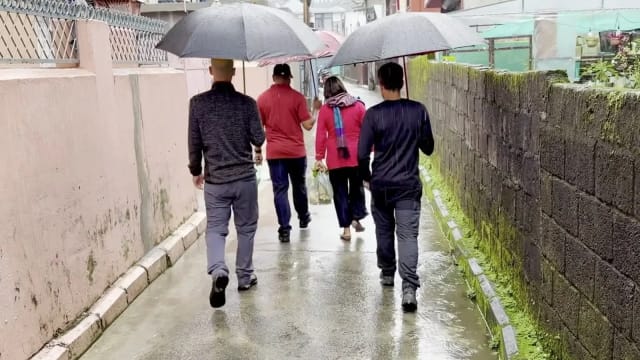
Most visitors stay by the lake. But the oldest part of the city, Old Pokhara Bazaar (Purano Bazaar), sits a few kilometres north and feels like a different place: narrow stone lanes, brick shop-houses, small temples, and sweet shops frying breakfast before most hotels have woken up.
Where it is and how to get there
Old Pokhara is about 4 km north of Lakeside (Baidam). Approximate travel times from Lakeside, depending on traffic:
| Option | Time |
|---|---|
| Taxi | About 15 to 20 minutes |
| Local bus | About 30 minutes |
| Bicycle | About 40 minutes |
Ask your hotel which bus to take, because routes change. If you take one of our classes with the market-and-cooking package, hotel pickup and drop-off from Lakeside is included.
A short history
Old Pokhara grew as a trading town on routes between Tibet, Mustang and India. Newar merchant families, who came from the Kathmandu Valley, are widely credited with building its character. You can still see their double-storey brick shop-houses with carved wooden window lattices (tikijhya) along the old stone street.
Key sites
- Bindhyabasini Temple. A Hindu temple dedicated to the goddess Durga (Bhagawati) on a small hill at the northern end of the bazaar. It is widely seen as Pokhara's most important shrine. On clear mornings you can see the Annapurna range from the courtyard.
- Bhimsen Temple. A two-tiered pagoda in the middle of the old market street, dedicated to Bhimsen, the deity of traders and merchants.
- The old lanes. Walk slowly. The best things here are small: a doorway, a carved window, a shop selling copper pots.
- Nearby. The Seti River gorge cuts through this part of the city, and the Gurkha Memorial Museum is also in Pokhara.
Food culture
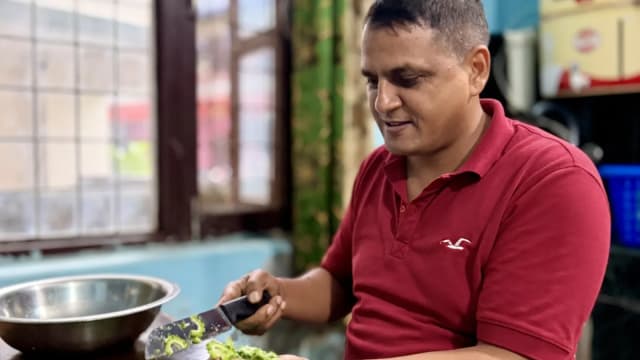
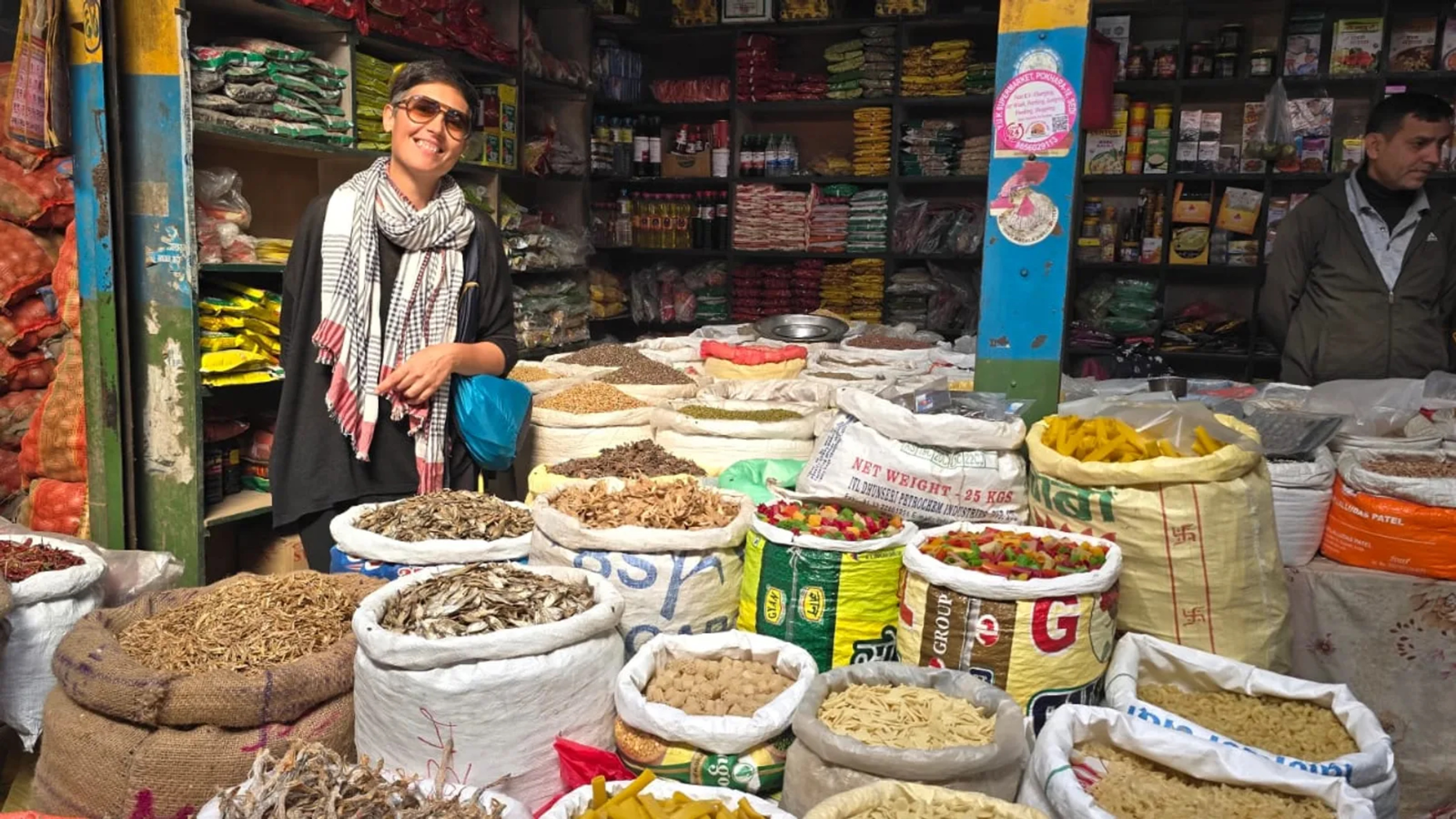
Early morning is the best time. Sweet shops and teahouses start frying sel roti and samosas around 7:30 to 9:30 AM, and family-run eateries (bhojanalaya) serve dal bhat. Farmers bring greens, radishes, pumpkins and herbs to the morning markets. Read What to Eat in Pokhara for more.
Visiting respectfully
- Cover your shoulders and knees at temples.
- Take off your shoes before entering temple buildings. Some temples also ask you to remove leather items, so check the signs.
- At Hindu temples, walk clockwise around the shrine if you want to follow local practice. At Buddhist sites, such as the Tibetan settlements elsewhere in Pokhara, walk clockwise around stupas and prayer wheels.
- Do not photograph inside the inner shrine. Streets and courtyards are generally fine, but ask first when photographing people.
- Entry to Bindhyabasini is free and voluntary donations are welcome.
Best time to visit
Go between about 7:30 and 10:30 AM, when the light is soft, the market is busy and the temples are calm.
Plan your day
Combine the bazaar with a cooking class. Our kitchen is in Old Pokhara (Parshyang - Bagale Tole Marga), and the market-and-cooking package starts with a walk through the market to choose ingredients. See the booking page or read Cooking Class in Pokhara. For ideas beyond the bazaar, see Things to Do in Pokhara Besides Trekking.
Frequently Asked Questions
Is Old Pokhara worth visiting?
Yes, if you want to see the older, quieter side of the city.
How far is it from Lakeside?
About 4 km, around 15 to 20 minutes by taxi.
Is it free to visit Bindhyabasini Temple?
Entry is free, and donations are voluntary.
When is the best time to go?
Early morning, roughly 7:30 to 10:30 AM.
Can I take photos?
In streets and courtyards, generally yes. Do not photograph inside the inner shrine.