A restaurant shows you the menu. A home kitchen shows you how the food is actually made, who makes it, and how guests are welcomed. That difference is why many visitors say the home-kitchen class was the highlight of their time in Pokhara.
Beyond the restaurant dining room
In many Nepali homes, the main meals are a hot lunch-time meal in the late morning and another in the evening, with tea and a light snack (khaja) in between. Exact times vary by household. Cooking is done fresh, and meals are shared.
Tools of the Nepali kitchen
- Masala dani: a round container with small compartments for everyday spices.
- Silauto and lohoro: a flat stone and a stone roller used to grind ginger, garlic, tomato and hemp seed without heat.
- Iron ladle for tempering: used to heat oil with spices for jhaneko, the finishing step for dal.
- Pressure cooker: found in most Nepali households. It saves fuel and time, and cooks lentils fast.
Hospitality: "Atithi Devo Bhava"
Atithi Devo Bhava is a Sanskrit phrase meaning "the guest is a god." It is used across Nepal and India and describes how many Nepali hosts see their role. Expect tea on arrival, repeated offers of food, and a host who is happy when you finish your plate.
Kitchen customs and *jutho*
Jutho describes food or utensils that have touched someone's mouth or personal plate, which makes them unclean to share. In practice this means:
- Use a serving spoon, not your own spoon, when taking food from a shared dish.
- Do not offer food you have already bitten.
- When drinking from a shared bottle, many people avoid touching the rim with their lips.
Other customs: remove your shoes before entering the kitchen or dining area, and eat with your right hand if you choose to eat by hand. Cutlery is always provided for guests, so use it if you prefer.
Why we cook in historic Old Pokhara
Our family-run kitchen is in Old Pokhara, in the residential lanes of the city's oldest quarter, away from the busy lakeside strip. We use filtered water and washed vegetables. Read more about the area in the Old Pokhara Bazaar guide.
What a class feels like
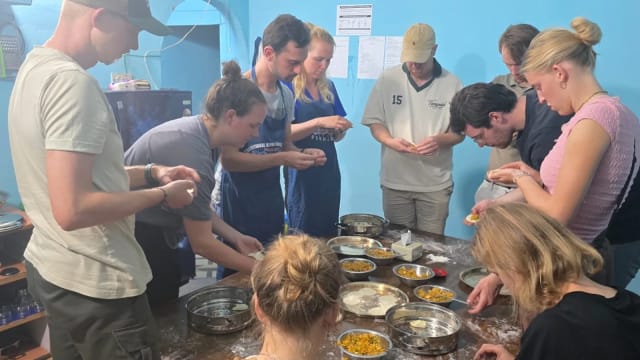
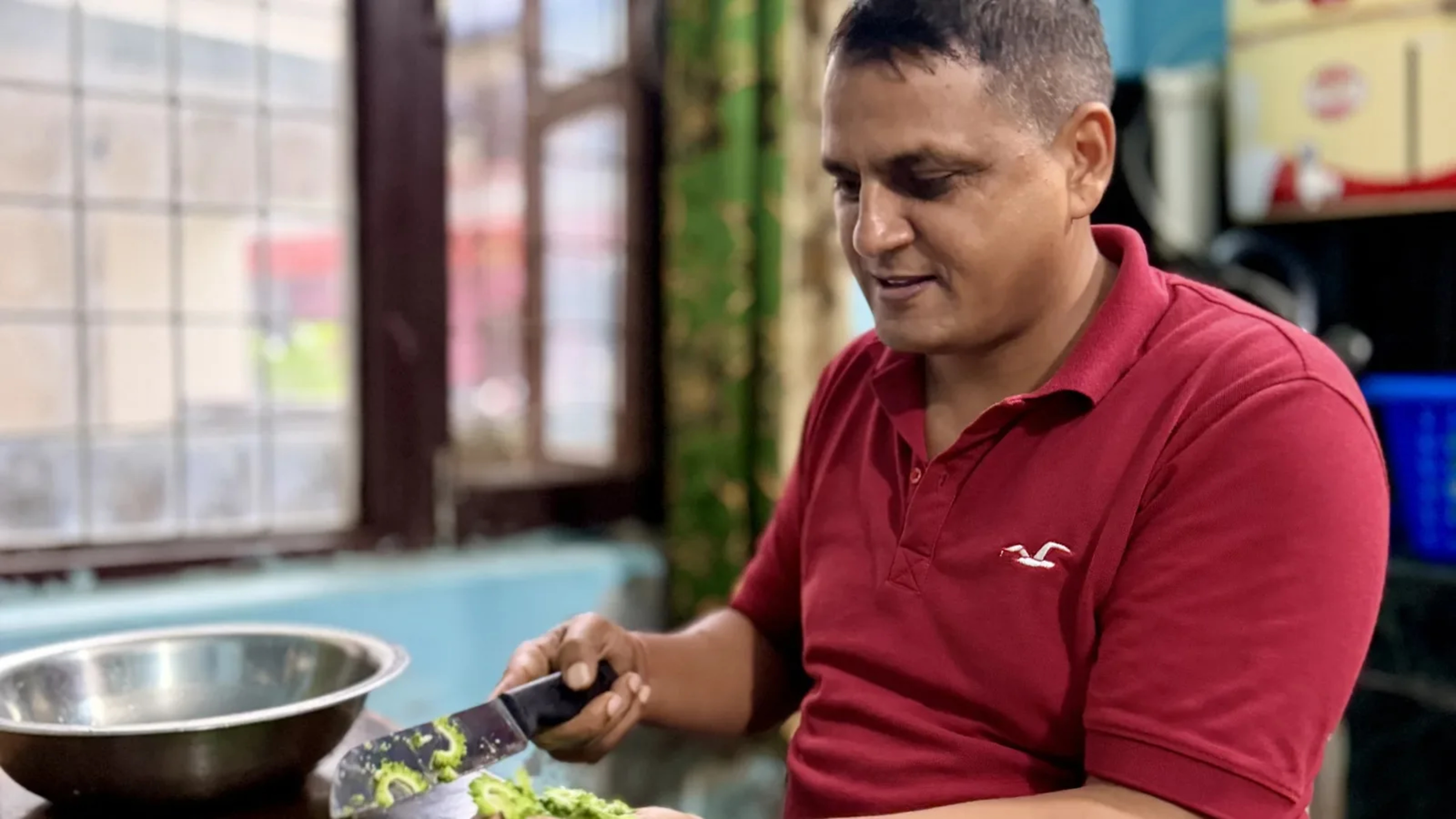
You arrive as a guest. Your cook welcomes you with tea, shows you the ingredients, and guides you through each step. Then everyone sits down to the meal. Classes are three hours and run at these times:
- 10:30 AM - 13:30 PM
- 14:00 PM - 17:00 PM
- 17:00 PM - 20:00 PM
Prices start at USD 30 per person. Read Cooking Class in Pokhara or book here.
Related reading: What Is Dal Bhat? · Traditional Nepali Food · Eating in Nepal
Frequently Asked Questions
Do Nepalis really eat with their hands?
Many do, especially at home. Visitors can use cutlery.
What is *jutho*?
The idea that food touched by your mouth or plate should not be shared.
Why do Nepali kitchens use pressure cookers?
They save fuel and time, particularly for lentils.
Is it safe to cook and eat in a home kitchen?
We use filtered water and washed vegetables. Tell us about any allergies when you book.