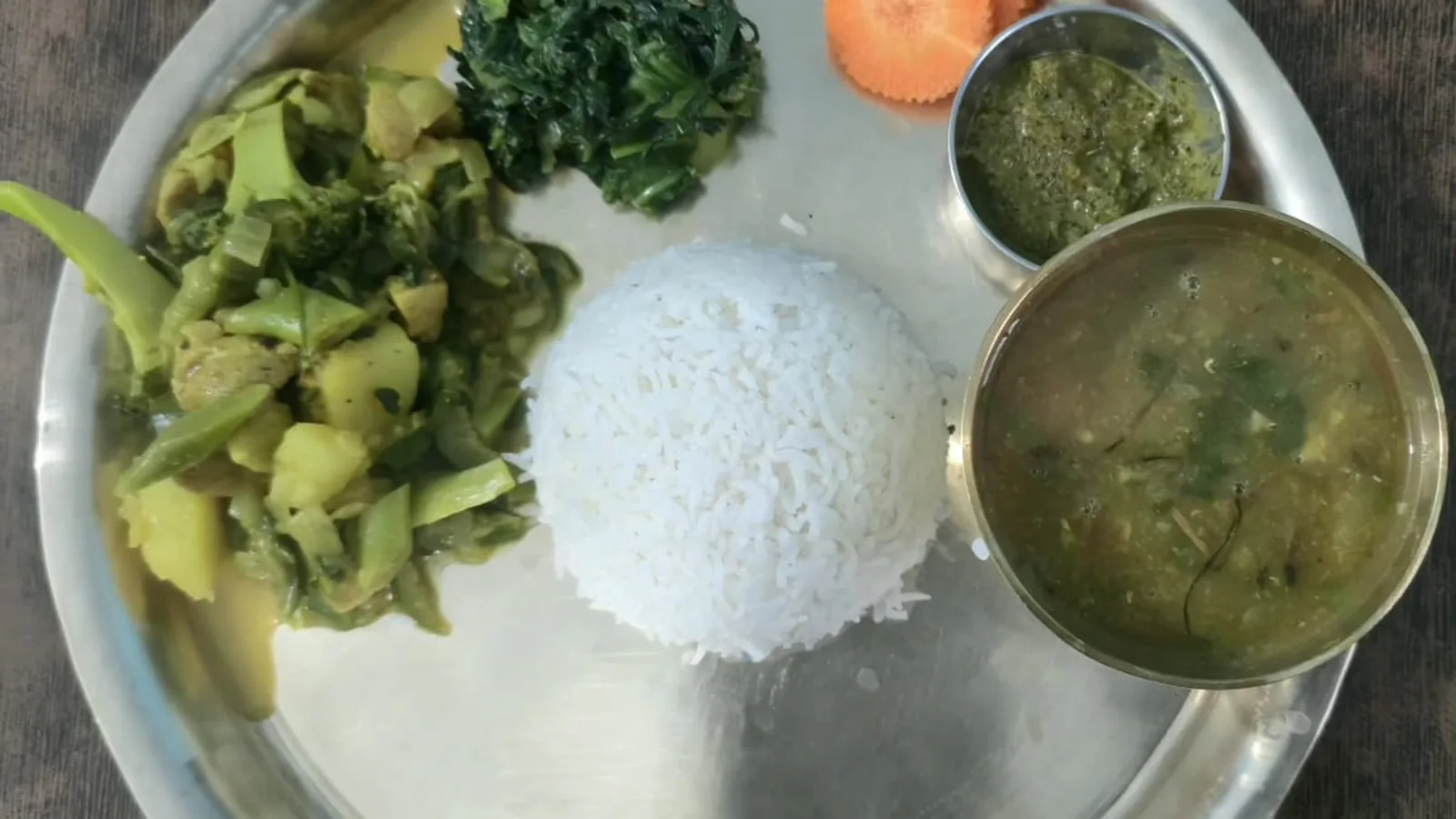
*Dal bhat is Nepal's everyday meal: lentil soup (dal) served with steamed rice (bhat), plus vegetable curry, stir-fried greens and a pickle.* Millions of people across Nepal eat it, often twice a day. If you are visiting Nepal, you will see it on nearly every menu.
What the words mean
- Dal is a spiced lentil soup.
- Bhat is steamed rice, usually white and sometimes brown in the mountains.
A full plate is usually called dal bhat tarkari, because it includes tarkari (vegetable curry).
What is on the plate
| Part | What it is |
|---|---|
| Bhat | Steamed rice |
| Dal | Lentil soup (musuro red lentils, moong or urad) finished with jhaneko, a hot-oil tempering |
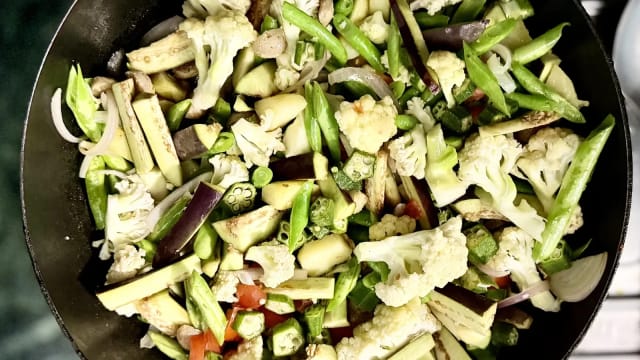
| Tarkari | A seasonal vegetable curry |
| Saag | Greens such as mustard, spinach or radish tops, fried in mustard oil with garlic and fenugreek |
| Chutney | A fresh chutney, such as tomato and hemp seed, or fermented gundruk |
Many plates also come with a little yoghurt, papad or a salad.
"Dal Bhat Power, 24 Hour!"
You will hear this slogan on trekking routes. It is a Nepali saying that dal bhat gives you energy for a whole day. Lentils and rice together make a balanced, filling meal, with fibre, iron and protein. Porters and trekkers rely on it, and teahouses along popular trails often offer refills of rice and dal. Ask before you order, because policies vary.
How to eat it the traditional way
Most Nepali families eat with the right hand, using the fingertips and thumb to mix a little rice with dal and curry. Cutlery is always fine for visitors. Do not worry about getting it wrong, because hosts are delighted that you are trying.
Regional variations
- Home-style dal bhat is mild and built around seasonal vegetables.
- Thakali sets come from the Thak Khola valley in Mustang and often include buckwheat, gundruk, ghee and jimbu.
- The southern plains (Terai) often use toor dal and parboiled rice, with influences from northern India.
Is dal bhat vegetarian, vegan and gluten-free?
Everyday dal bhat is vegetarian and usually gluten-free. It is vegan if it is made with oil instead of ghee, so ask for it without ghee. Meat is usually saved for festivals and weekend feasts.
Want to cook it yourself?
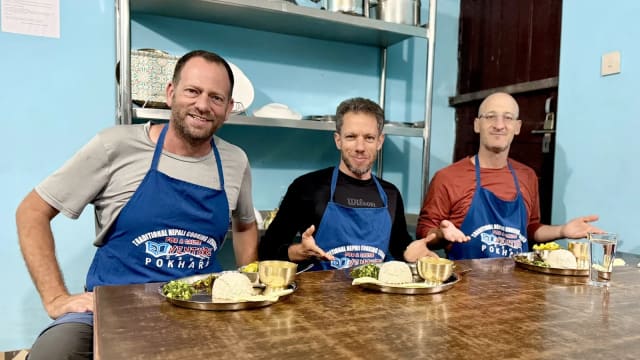
Try our step-by-step dal bhat recipe, or join our Dal Bhat cooking class in Pokhara (from USD 30 per person).
Related reading: Traditional Nepali Food · Nepali Home Cooking · Eating in Nepal
Frequently Asked Questions
What does dal bhat mean in English?
"Lentils and rice."
Is dal bhat the same as an Indian thali?
They are related, but dal bhat is simpler and lighter, and it follows Nepal's own flavours and seasons.
Is dal bhat spicy?
Everyday dal bhat is mild. The heat comes from the pickle and fresh chilli on the side.
What's the difference between dal bhat and dal bhat tarkari?
Tarkari means vegetable curry, so dal bhat tarkari is the full plate with a curry included.