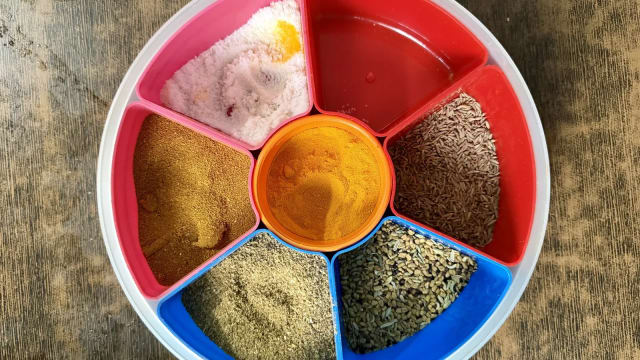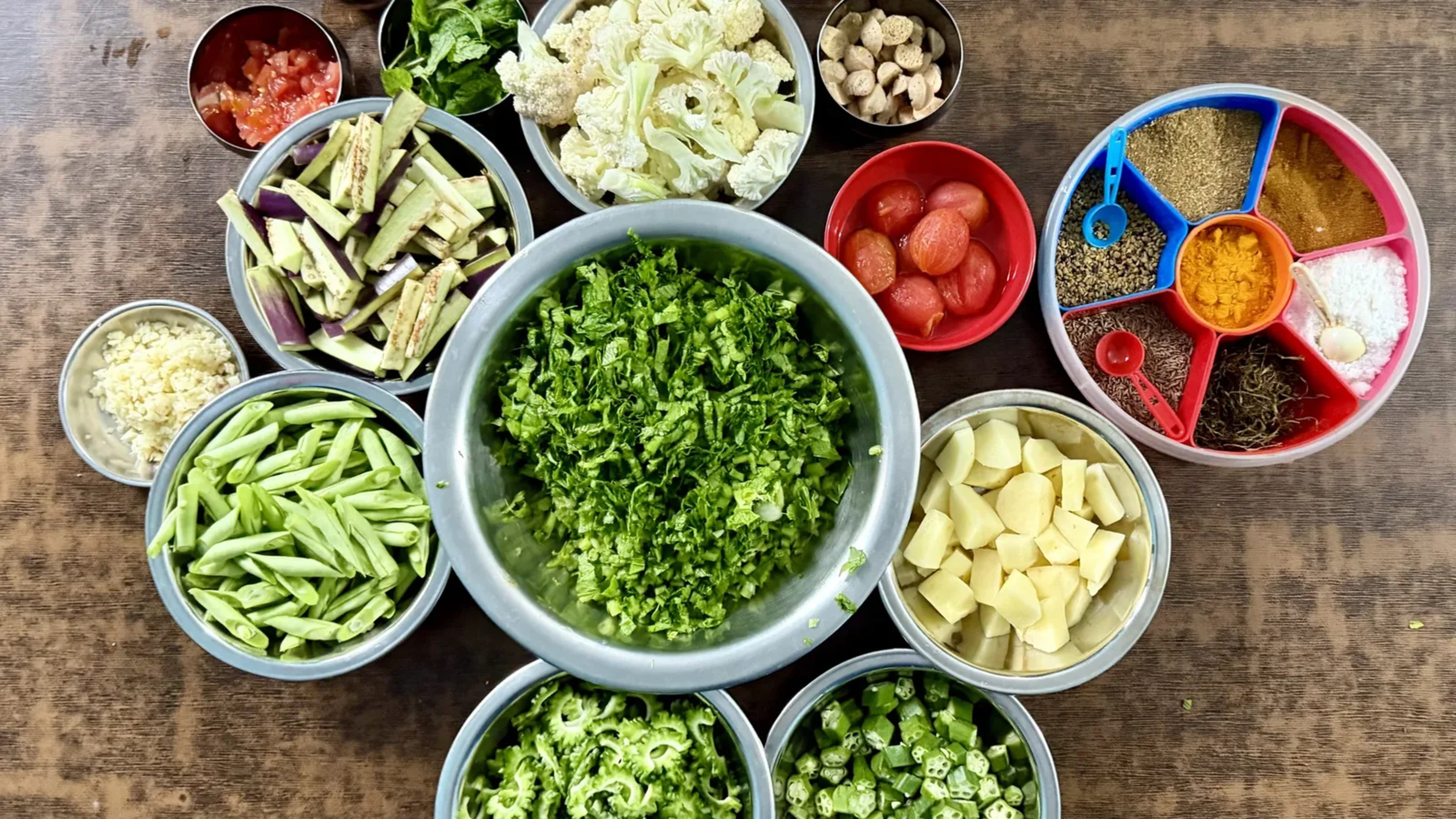
This is a home-style dal bhat as cooked in Pokhara: a silky red lentil dal finished with hot-oil tempering, fluffy rice, a simple vegetable curry and a fresh tomato chutney. It takes about 70 minutes and serves 4. It is vegetarian, and vegan if you use oil instead of ghee.
Prep: 25 min · Cook: 45 min · Total: 1 hr 10 min · Serves: 4
New to the dish? Read What Is Dal Bhat? first.
The key technique: jhaneko (tempering)
Nepali cooks fry the aromatics at the end, not the start. You heat oil until very hot, fry cumin, dried chilli and garlic for a few seconds, and pour the sizzling oil over the cooked dal. The hot oil releases the spices' aroma and carries it through the whole pot.
Authentic Nepali Dal Bhat Set
This is a home-style dal bhat as cooked in Pokhara: a silky red lentil dal finished with hot-oil tempering, fluffy rice, a simple vegetable curry and a fresh tomato chutney. It takes about 70 minutes and serves 4. It is vegetarian, and vegan if you use oil instead of ghee.
Ingredients:
- 1 cup (200 g) split red lentils (*musuro*) or split yellow moong dal
- 3½ cups (840 ml) water
- ½ tsp ground turmeric
- 1 tsp fine sea salt
- 2 cups (400 g) basmati or jasmine rice
- 3½ cups (840 ml) water
- 2 tbsp mustard oil or ghee (use oil for vegan)
- ½ tsp whole cumin seeds
- 1 pinch dried jimbu (see substitutes)
- 2 cloves garlic, thinly sliced
- 1 dried whole red chilli
- 1 tbsp oil
- 1 medium red onion, finely chopped
- 1 tbsp grated fresh ginger
- 1 clove garlic, crushed
- 2 medium potatoes, cut into 2 cm cubes
- 1 small head cauliflower, in florets
- 1 tsp ground cumin and 1 tsp ground coriander
- 2 ripe medium tomatoes, chopped
- ½ tsp salt
- 2 large vine tomatoes
- 1 tbsp roasted hemp seeds
- ¼ tsp ground timur, or see substitutes
- 1 tbsp fresh lime juice
- 2 tbsp chopped fresh coriander
- ¼ tsp salt
Step-by-Step Instructions:
- DalWash the lentils until the water runs clear. Simmer with the water, turmeric and 1 tsp salt for about 20 minutes (about 8 minutes in a pressure cooker), until soft.
- RiceRinse the rice until the water is almost clear. Bring to a boil with the water, then cover and cook on low for 15 minutes. Turn off the heat and rest, covered, for 10 minutes.
- TarkariHeat the oil, then fry the onion until soft. Add ginger and garlic, then the potato and cauliflower. Stir in the cumin, coriander and salt, add the tomatoes, cover, and simmer for about 15 minutes until tender.
- ChutneyChar the tomatoes over a flame or under a grill until blistered. Crush them with the hemp seeds, salt, lime juice, timur and coriander.
- JhanekoHeat the oil in a small pan until very hot. Add the cumin, then the jimbu, chilli and garlic. Fry for about 20 to 30 seconds, until the garlic is just golden. Pour the oil over the dal and cover the pot straight away.
- ServePlate rice, dal, tarkari and chutney together, and finish with fresh coriander.
The timeline (cook everything at once)
| Minute | Task |
|---|---|
| 0 | Start the lentils simmering |
| 5 | Start the rice |
| 10 | Chop vegetables and start the tarkari |
| 25 | Rice is done, so leave it to rest. Check the lentils |
| 35 | Char tomatoes and make the chutney |
| 40 | Prepare and pour the jhaneko over the dal |
| 45 | Plate and serve |
Times vary with your stove, so treat this as a guide.
Substitutes
- Jimbu: a pinch of dried chives with a little extra garlic. The flavour will differ.
- Mustard oil: a neutral oil with a few mustard seeds.
- Timur: ground Sichuan peppercorn. It is closest, but not identical.
Cook's tips
- Red lentils cook about twice as fast as whole lentils.
- Do not let the garlic go dark brown, because it turns bitter.
- Add the hot oil to the dal at the last minute, so the aroma stays fresh.
Learn it in person
Our Dal Bhat cooking class in Pokhara (from USD 30 per person) teaches this meal hands-on. See also our Nepali spices guide.
Frequently Asked Questions
Can I make it vegan?
Yes. Use oil instead of ghee.
Can I use yellow lentils?
Yes. Split yellow moong dal works, and cooks in a similar time.
Is it gluten-free?
Yes, if you check the asafoetida or any spice blends you use.
Where do I find timur and jimbu?
Himalayan or South Asian specialty shops, or the substitutes above.