Nepali cooking is aromatic rather than fiery. It relies on fresh herbs, whole spices tempered in hot oil, and a few wild mountain ingredients you will not find in most kitchens abroad. This guide explains the important ones, what they taste like, and what to use if you cannot find them.
The special ingredients
Timur is the dried husk of a citrus-family plant (Zanthoxylum) that grows wild in Nepal's mid-hills. It smells citrusy and leaves a tingling, numbing sensation on the tongue. It is related to Sichuan pepper but is not the same spice. It is used in Mo:Mo chutney and in spice rubs.
Jimbu is a dried wild mountain herb in the onion family, used mainly in Thakali-style lentil dishes. Do not add it raw. Fry it in hot oil or ghee for about 5 to 10 seconds, then pour it over the dal.
Gundruk is fermented, sun-dried leafy greens (often mustard, radish or cauliflower leaves). It has a sour, savoury taste and is used in soups and pickles.
Sinki is fermented radish root, used in soups and pickles.
Everyday spice table
| Ingredient | Nepali name | Flavour | Typical use | Substitute abroad |
|---|---|---|---|---|
| Turmeric | besar | Earthy, warm | Dal, curries | None needed |
| Fenugreek seeds | methi | Slightly bitter, maple-like | Saag, tempering | None needed |
| Carom seeds | jwanu | Thyme-like, sharp | Breads, curries | Thyme with a pinch of cumin |
| Asafoetida | hing | Savoury, onion-garlic | Dal | A little garlic powder |
| Mustard oil | tori ko tel | Pungent, sharp | Frying, pickles | See note below |
| Tamarind-sour fruit | chuk amilo | Sharp, sour | Pickles, sauces | Lemon or lime juice |
| Timur | timur | Citrusy, tingly | Chutney, rubs | Ground Sichuan peppercorn (similar, not identical) |
| Jimbu | jimbu | Garlicky, herbal | Dal tempering | A pinch of dried chives and a little garlic. The taste will differ |
A note on mustard oil: In some countries, cold-pressed mustard oil is sold labelled "for external use only" because of local rules on erucic acid. Check the rules where you live. If you prefer not to use it, a neutral oil with a few mustard seeds adds a similar bite.
The masala dani
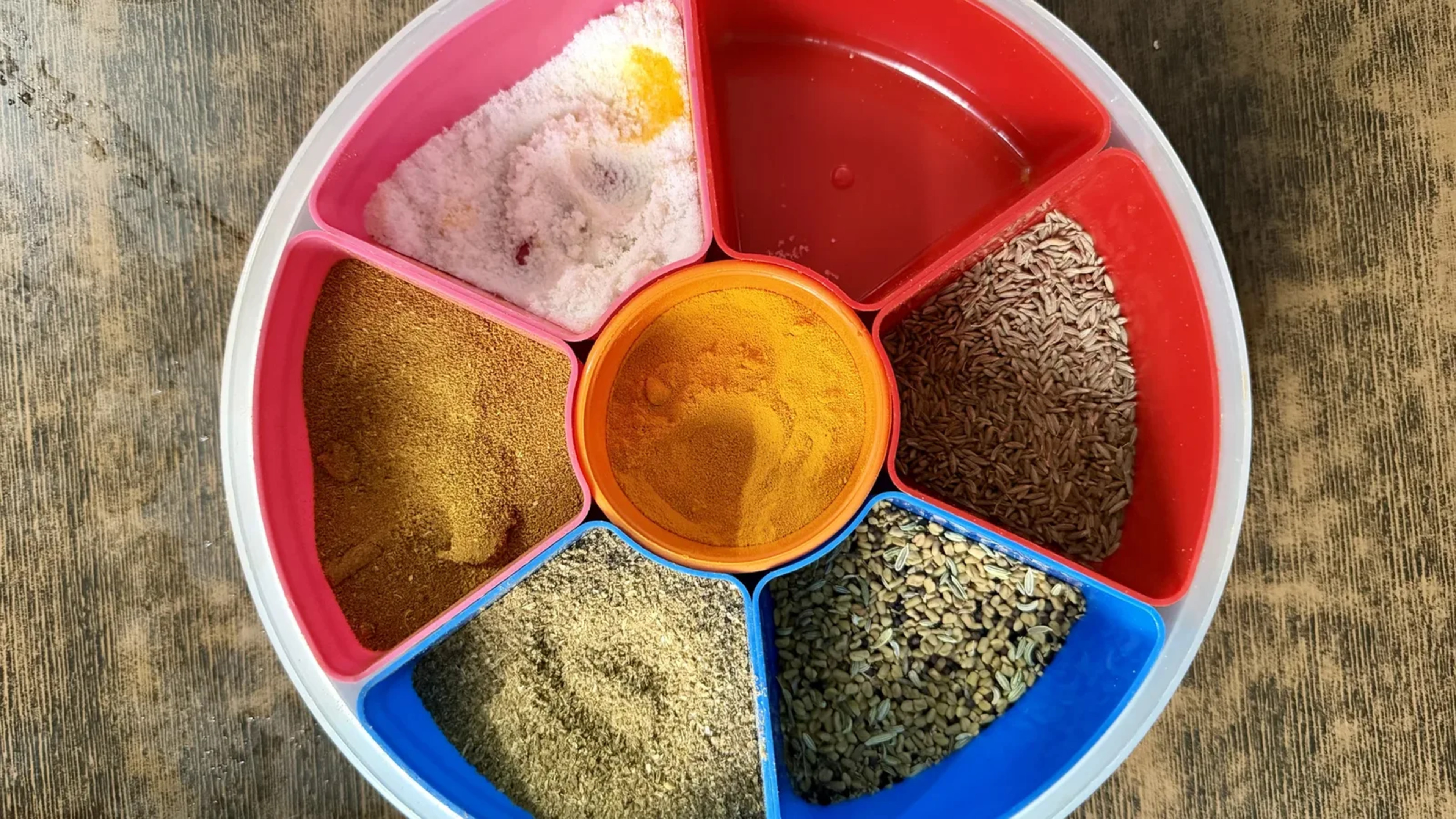
Many Nepali kitchens keep everyday spices in a round container with several small compartments, called a masala dani. Special spices like timur and jimbu are usually kept in separate airtight jars so their scent stays strong.
Buying spices in Pokhara
For the best quality, buy from traditional spice stalls in Old Pokhara Bazaar rather than tourist shops. Ask for whole spices, which keep their oils longer than ground. Store them in airtight glass jars away from light. For more on the area, see our Old Pokhara Bazaar guide.
Cooking with these ingredients
- Our Dal Bhat recipe uses jimbu and gives substitutes.
- Our vegetable Mo:Mo recipe uses timur in the chutney.
- Learn them hands-on in our cooking classes.
Frequently Asked Questions
What is timur in English?
Nepali pepper, or Nepali Sichuan pepper. It is not a true pepper.
What can I use instead of timur?
Ground Sichuan peppercorn is closest.
What is jimbu?
A dried wild Himalayan herb in the onion family.
What is gundruk?
Fermented, dried leafy greens used in soups and pickles.
Is mustard oil safe to cook with?
It is widely used in Nepal. Rules differ by country, so check local guidance where you live.