Walk into a Nepali kitchen and you will smell cumin, turmeric and coriander, as in many South Asian kitchens. Then something unfamiliar: a sharp citrus note, a garlicky mountain herb, a tang that is hard to place. Those are the ingredients that make Nepali food its own.
Timur: the tingly pepper
Timur is the dried husk of a citrus-family plant that grows wild in Nepal's mid-hills. It smells of citrus and leaves a light tingling, numbing sensation on your tongue. It is related to Sichuan pepper, but it is not the same spice.
You will taste it in tomato-hemp-seed chutney and in some spice rubs. Guests often say it is the one flavour they cannot stop thinking about.
Jimbu: the mountain herb
Jimbu is a dried wild mountain herb in the onion family. It tastes garlicky and a little smoky. Cooks fry it in hot oil or ghee for a few seconds and pour it over dal. It is especially linked with Thakali cooking from Mustang.
Gundruk and sinki: the fermented flavours
Gundruk is fermented, sun-dried leafy greens with a sour, savoury taste. Sinki is fermented radish root. Both give soups and pickles a deep, tangy base. They are traditional ways of keeping seasonal vegetables through the year.
Mustard oil and tempering
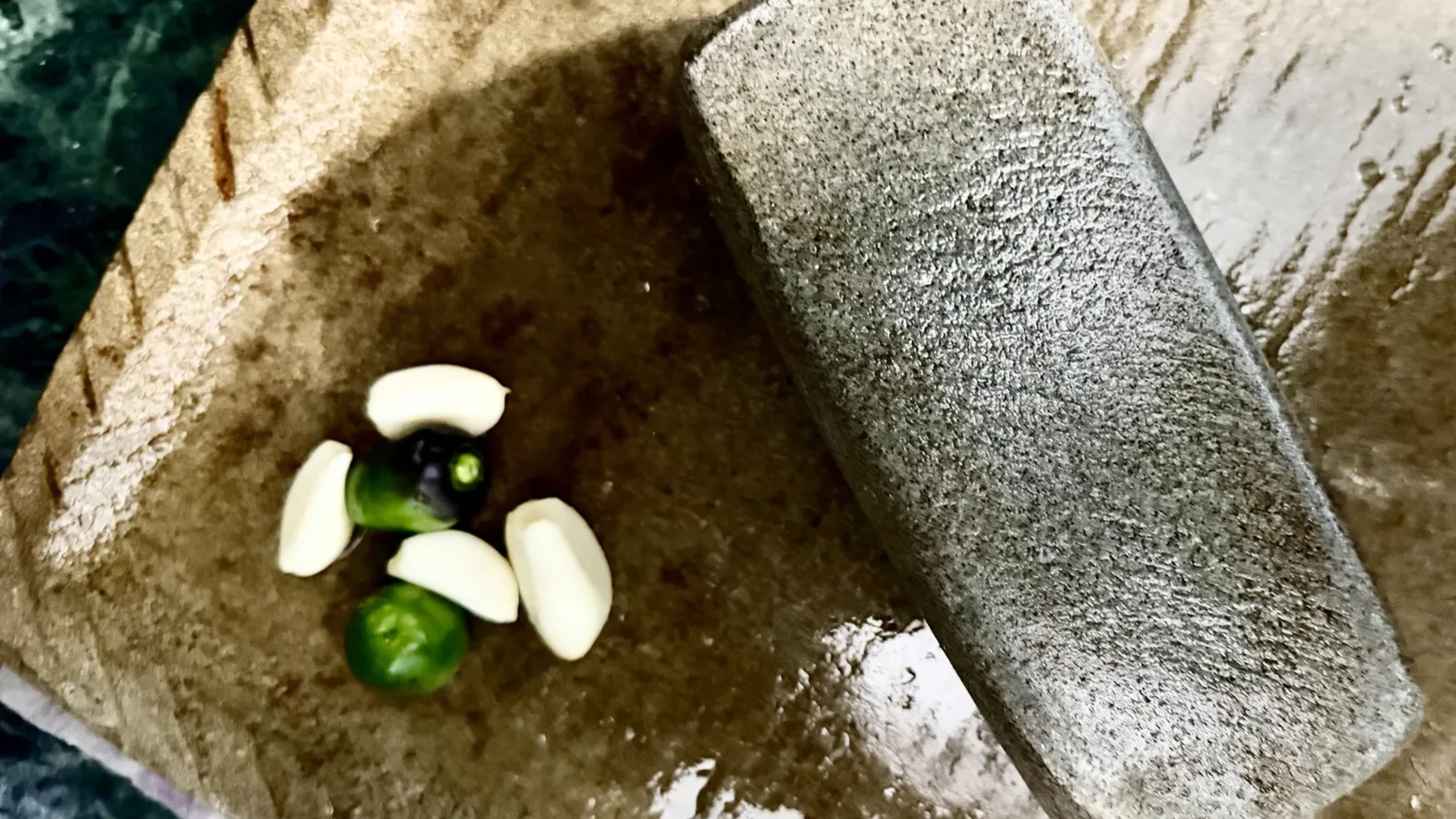
Mustard oil is used for frying, pickles and tempering. It is pungent, with a sharp bite. The tempering technique, jhaneko, pours sizzling oil with cumin, dried chilli and garlic over dal at the end of cooking. It is where much of the aroma comes from.
Garam masala in Nepali kitchens
Many Nepali households use a garam masala, a blend of warming ground spices, in meat curries and some vegetable dishes. Blends vary by family and region, so there is no single recipe. Common ingredients in South Asian garam masala include cumin, coriander seed, cardamom, cinnamon, cloves and black pepper. Dal bhat itself is usually seasoned more lightly, with the aroma coming from jhaneko.
The everyday spices
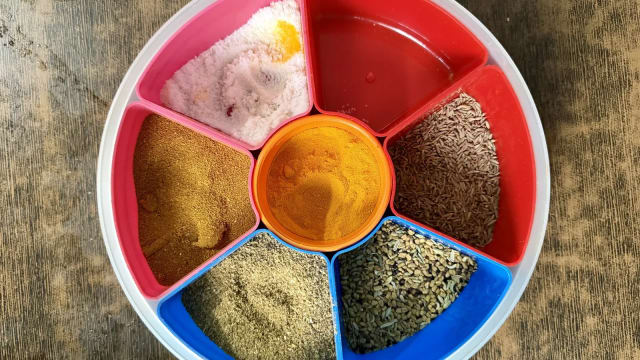
Turmeric (besar), cumin, coriander, fenugreek (methi), carom seeds (jwanu) and asafoetida (hing) are used across Nepali cooking. Nepali cooking tends to be aromatic rather than fiery.
See and taste them in Pokhara
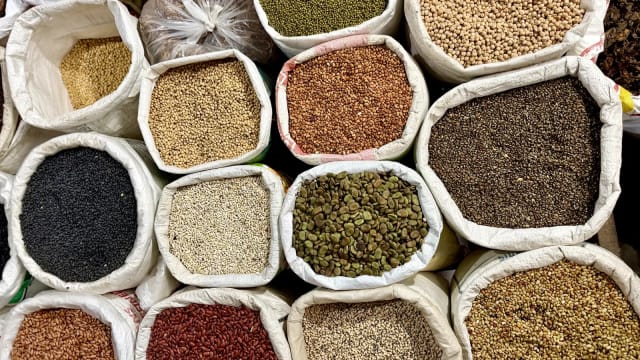
If you join our market package, you visit a local market where spices and fresh produce are sold, and then use them in your own dish. In class, you cook with timur and jimbu and learn how little you need. See Pokhara Cooking Class with Market Visit.
Cooking with them at home
Timur and jimbu can be hard to find outside Nepal. Our pantry guide lists substitutes. For a full reference table, read our Nepali spices guide. You can also try the dal bhat recipe or the vegetable Mo:Mo recipe.
A note on bringing spices home
Rules about carrying food products across borders differ by country. Check your own country's customs guidance before you pack spices or dried herbs.
Frequently Asked Questions
What is timur?
A tingly, citrusy Nepali pepper. It is related to Sichuan pepper but not identical.
What can I use instead of timur?
Ground Sichuan peppercorn is the closest.
What is jimbu?
A dried wild Himalayan herb in the onion family.
Are Nepali spices very hot?
No. Nepali food is usually mild, and the heat comes from chilli and pickles on the side.
Can I learn to use them?
Yes. You cook with them in our classes.