Ask when dal bhat began and you will not get a single date. Rice and lentils have been staples across South Asia for a very long time, and the meal grew through use rather than invention. Nobody wrote it down. It was cooked, passed on and adapted. That is why it is such a good way into Nepal's history.
A meal made from what the land gives
Nepal's geography runs from the southern plains to the high Himalaya. Rice grows in the lowlands and river valleys, and lentils are a reliable, storable protein. Together they make a filling meal that works for farmers, travellers and traders. That practical logic is the foundation of dal bhat.
Trade routes brought ingredients and ideas
For centuries, the area around Pokhara sat on routes linking the Himalaya, the hills and the plains. Traders, including Newar merchant families and communities from Mustang, moved goods and shaped local food. Spices, salt and cooking styles travelled with them. You can still taste this today: Thakali meals from Mustang use buckwheat, ghee and jimbu, while the southern plains cook closer to northern India.
For more on the quarter where we cook, read the Old Pokhara Bazaar guide.
Wild and fermented ingredients
Some of what makes Nepali dal bhat distinctive comes from foraging and preserving. Timur (a tingly pepper) and jimbu (a dried mountain herb) come from wild plants, and gundruk (fermented greens) is a traditional way of keeping vegetables through the year. Learn more in Nepal's Unique Spices.
The tempering technique
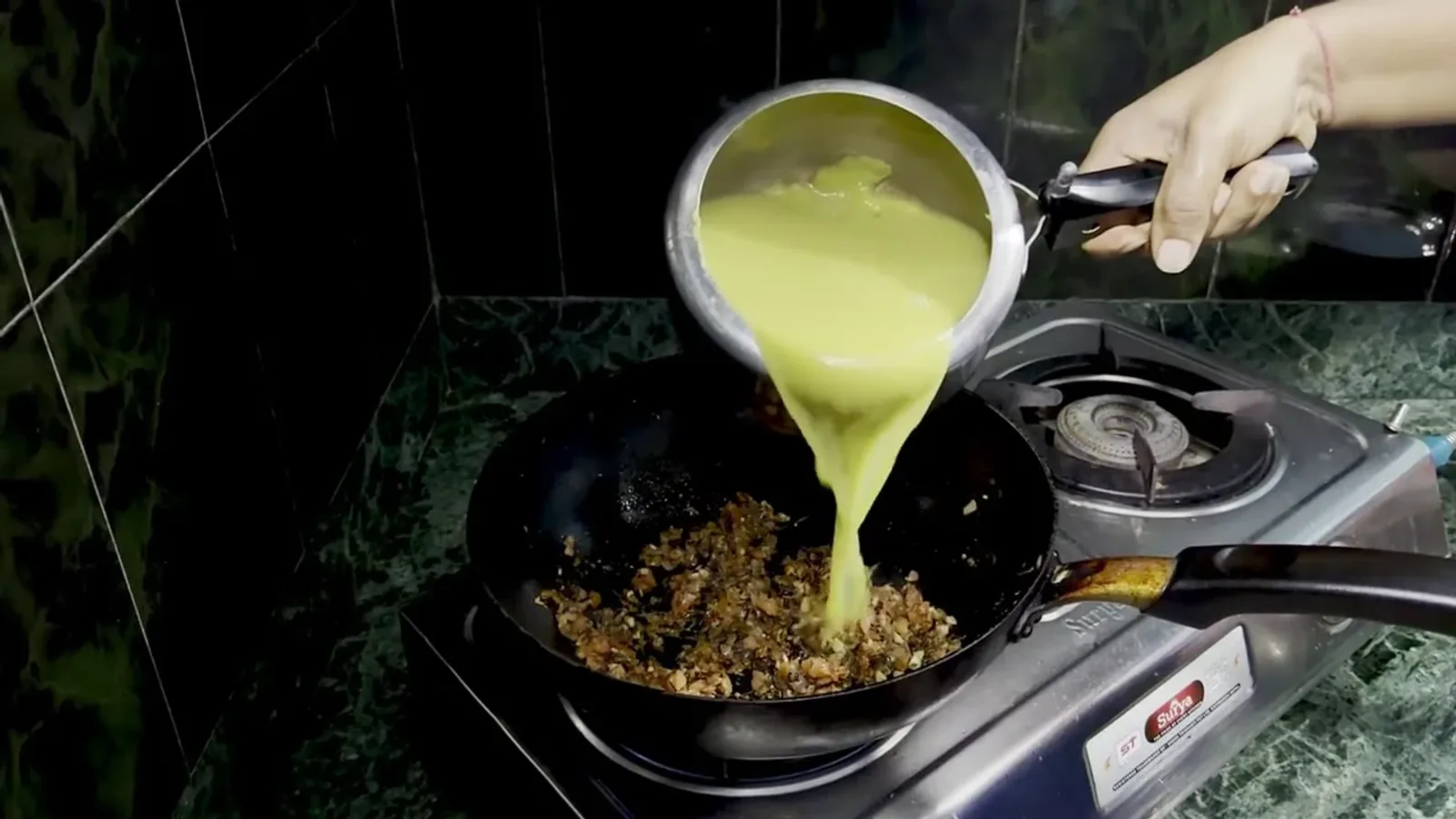
Nepali cooks finish dal with jhaneko: hot oil with cumin, chilli and garlic poured over the cooked lentils. It is a simple step that turns plain lentil soup into something fragrant. Our dal bhat recipe shows how.
Dal bhat in the hills and on the trail
For many Nepali families, dal bhat is eaten twice a day. On trekking routes you will hear the slogan "Dal Bhat Power, 24 Hour!", which captures how many porters and guides think of it. That phrase belongs to the trekking era, but the meal underneath it is much older in spirit.
Why food is a good way to remember the past
A building can be knocked down and a record can be lost. A recipe survives because people keep cooking it. Every plate of dal bhat holds decisions made by cooks over generations: which lentil, which spice, which vegetable is in season, who gets served first.
That is what we try to share in our classes. You are not only cooking and eating. You are learning where the food comes from and the people who kept it going.
Cook it with us
Our Dal Bhat class takes about three hours, from USD 30 per person. The market package (USD 40 per person for 2 or more, USD 60 for one person) includes a market visit and hotel pickup and drop-off from Lakeside.
Time slots:
- 10:30 AM - 13:30 PM
- 14:00 PM - 17:00 PM
- 17:00 PM - 20:00 PM
Related reading: What Is Dal Bhat? · Traditional Nepali Food · Dal Bhat vs Thali
Frequently Asked Questions
When did dal bhat begin?
There is no single date. Rice and lentils are long-standing staples in South Asia, and dal bhat developed gradually.
Is dal bhat from Nepal or India?
Both. Rice-and-lentil meals are found across the region, and Nepal has its own versions and ingredients.
Why do Nepalis eat dal bhat so often?
It is filling, balanced and made from ingredients that are widely available.
Is dal bhat vegetarian?
Everyday dal bhat is vegetarian.